Types of Keywords: Decision Tree for Intent and Long-Tail Wins
Learn the four types of keywords every content team needs, plus a tested decision tree for intent and a workflow for finding long-tail wins faster.

You can find a list of "27 types of keywords" in any SEO blog post. What you usually cannot find is a way to actually use that list — a method that turns a raw query into a content brief that ships, ranks, and converts.
This guide gives you that method. It defines the four types of keywords that drive almost every content decision, walks through a decision tree for labeling intent in under a minute, and ends with three worked analyses you can copy. By the FAQ you will be able to look at any query and confidently tell which content format and CTA it deserves.
The four types of keywords every content plan needs

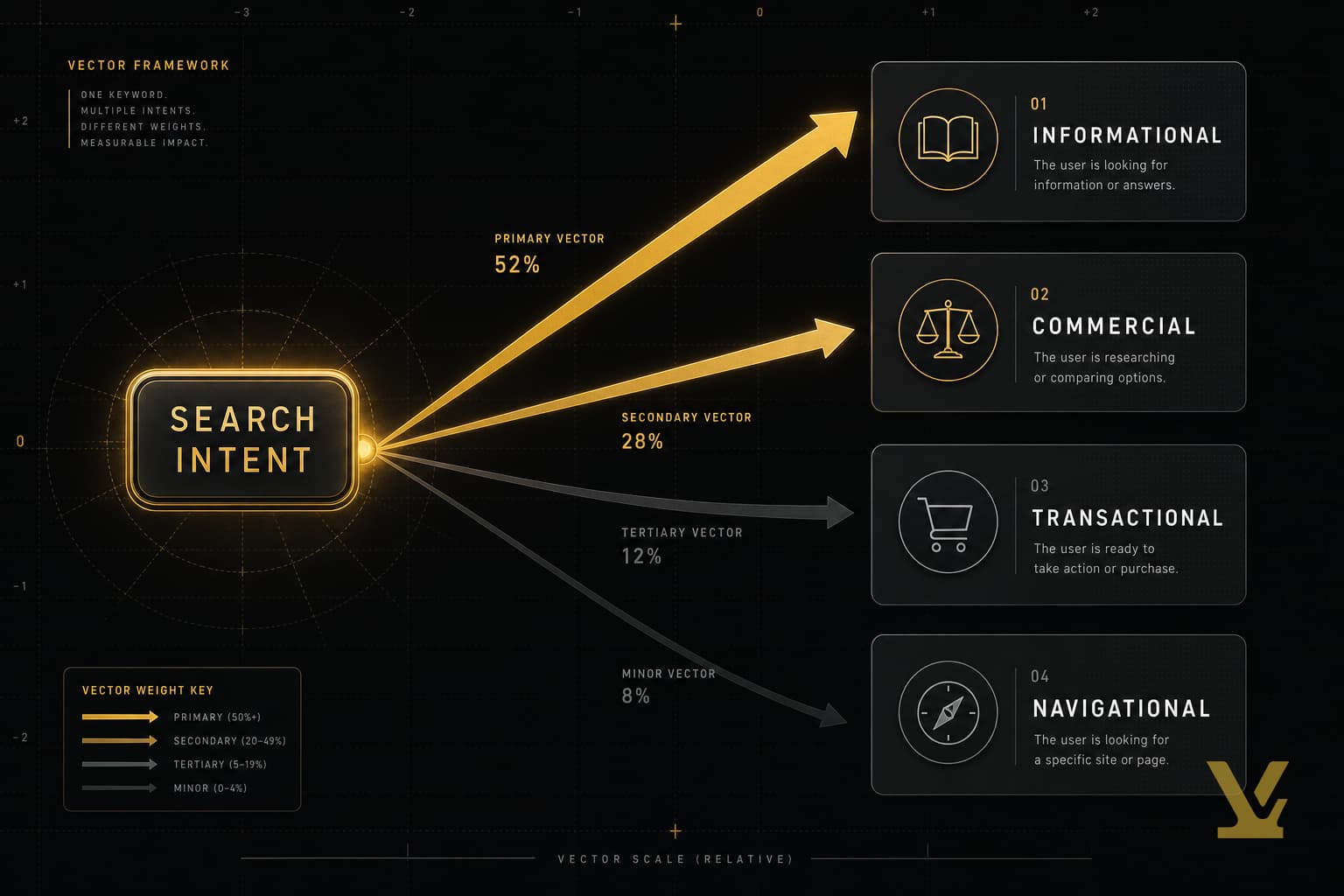
Search intent is the "why" behind a query, and it determines whether a reader will skim your post, save it, or close the tab. The four types of keywords below cover the vast majority of organic queries you will see in a content audit, and each maps to a distinct content format and call to action.
Informational — readers want to learn or solve a knowledge gap. Examples: "what is a long-tail keyword", "how to determine keyword intent", "search intent definition". Format: explainer or how-to article. CTA: subscribe, read a related guide, download a template.
Commercial — readers compare options before committing money or attention. Examples: "best free SEO tools", "ahrefs vs semrush", "keyword research tool reviews". Format: comparison, listicle, or buyer guide. CTA: free trial, demo, side-by-side download.
Transactional — readers are ready to act, often with a payment, signup, or download in mind. Examples: "buy keyword research tool", "varynforge pricing", "download SEO checklist". Format: landing page, pricing page, or gated asset. CTA: purchase, sign up, install.
Navigational — readers want a specific brand, product, or page. Examples: "varynforge login", "google keyword planner", "ahrefs site audit". Format: dedicated brand page, login, or feature page. CTA: open the page, log in, contact support.
Some queries live on the boundary — "best CRM for solo founders" sits between commercial and informational, "ahrefs free trial" between commercial and transactional. The decision tree later in this article gives you a deterministic way to label the boundary cases without ten minutes of debate.
What long-tail keywords are and why they convert
A long-tail keyword is a query of four or more words, low individual search volume, and tightly scoped intent. "Keyword research" is short-tail; "how to do keyword research for a topic cluster" is long-tail. Long-tail queries make up the majority of all search demand on the web (Ahrefs long-tail study), and they are usually the easier path to ranking for a small site.
The reason long-tail queries convert better is specificity. "best keyword tool" could be anyone — a curious blogger, a hiring manager, a competitor doing research. "best keyword research tool for solo creators with no budget" is a near-perfect description of one human and their problem. Specificity narrows the SERP, narrows the intent, and narrows the CTA you should put in front of them.
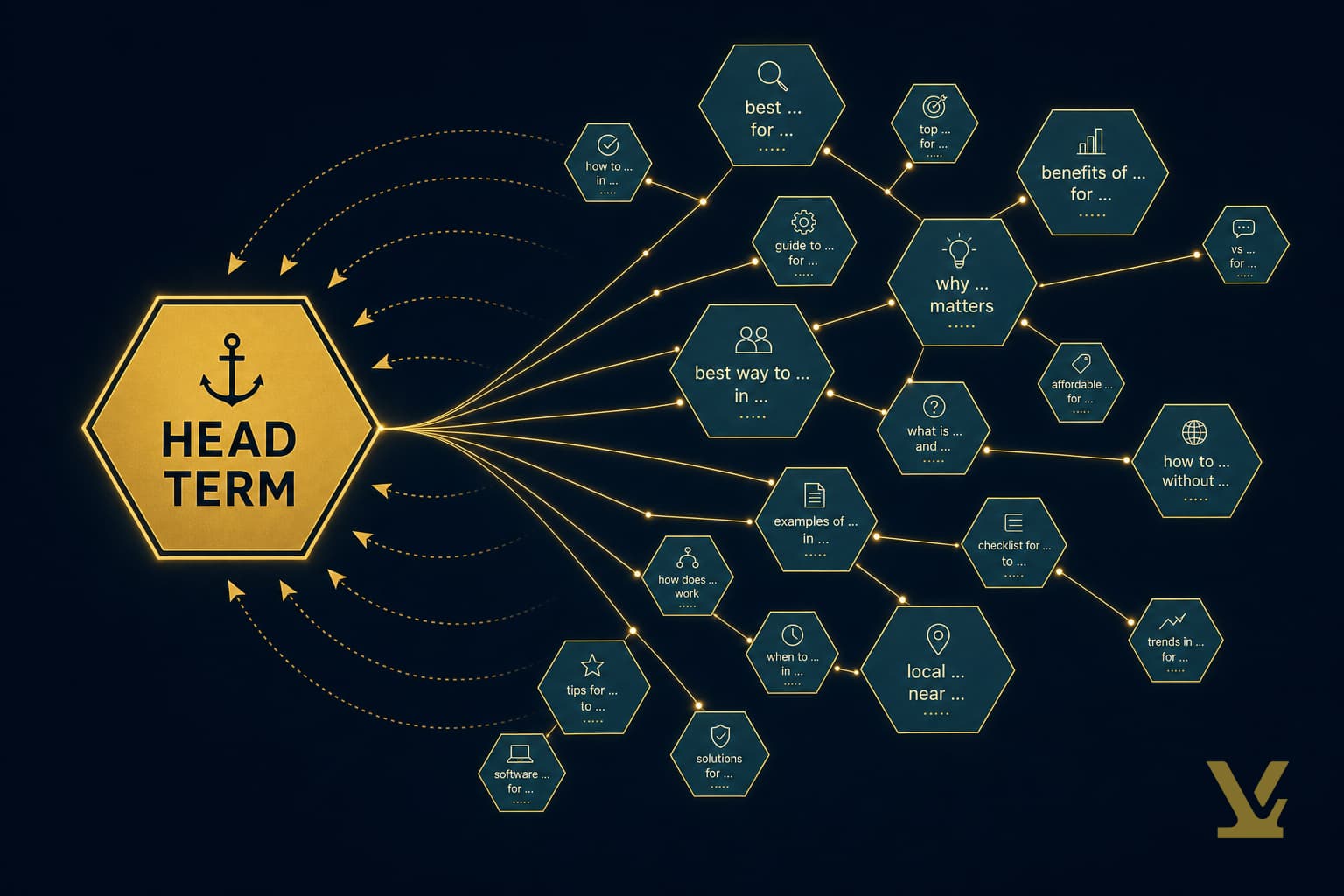
To discover long-tail variants from a head term, start with autocomplete and "People also ask" boxes on the SERP, then layer a paid or free buyer guide to keyword tools to expand each cluster. A manual SERP scrape and a notes file gets you 80 percent of the way for free (Backlinko keyword research guide). The same discovery habit extends past SEO — the long tail in digital marketing shows up in paid search, content topics, and even SKU catalogs, not just query lists.
How to determine keyword intent: a quick decision tree

When a teammate asks "is this a commercial or informational query?", you do not want a 20-minute debate. The decision tree below gets you to the right label in under a minute. Apply each step in order and stop the moment a step gives a definitive answer.
- Open the live SERP. If the top three organic results are mostly product pages, pricing pages, or signup forms, the query is transactional. Stop here.
- If the top three are listicles, comparisons, or "best X for Y" pages, the query is commercial. Stop here.
- If a single brand or product page owns the top result and there is no comparison content above the fold, the query is navigational. Stop here.
- Otherwise — explainer pages, definitions, how-to guides, glossary entries — the query is informational.
Reinforce the decision with three quick SERP signals. Look at the modifiers in the query itself ("best", "vs", "buy" tilt commercial or transactional; "what", "how", "why" tilt informational). Look at the People-Also-Ask box; the questions there reflect what the search engine believes the next-step intent is. Look at the sponsored slot; if AdSense or shopping ads are stacked four-deep, the query has commercial value even when the organic results lean educational. All three are third-party proxies read off someone else's SERP; pair them with first-party intent signals from your own funnel — search terms, product usage, support tickets — once third-party data gets thin.
Spotting commercial keyword opportunities in a query set
Commercial keywords are the highest-leverage targets for a small content site because they sit closest to revenue without requiring a fully transactional landing page. They are also the easiest to misclassify, because the modifiers overlap with informational and transactional queries.
Watch for these commercial-intent modifiers when scanning a query list:
- "best", "top", "leading" — comparison intent.
- "vs", "alternative to", "versus" — direct comparison intent.
- "reviews", "ratings", "rankings" — validation intent.
- "for [audience or use case]" — fit-for-purpose intent.
- "cheap", "affordable", "budget" — price-sensitive commercial intent.
Once labeled, map each commercial query to a content type — usually a comparison post, a buyer guide, or a feature-specific listicle — and pair it with one mid-funnel CTA: a free trial, a calculator, or a gated comparison sheet. Avoid pure newsletter CTAs on commercial pages; you are wasting the reader's clearest signal of buying intent.
A prioritization framework that ties intent to business value

Once you have a labeled query list, prioritize with three weighted dimensions: intent, traffic potential, and business value. Score each dimension on a one-to-five scale, then multiply by a fixed weight. We use intent at weight three, traffic potential at weight two, and business value at weight one — intent matters most because a high-volume query at the wrong intent does not move revenue.
A worked score: a "best free SEO tools" query gets intent five (commercial, near purchase), traffic four (high but competitive), and business value three (we sell a paid tool, so the bridge from free is direct). The composite is fifteen plus eight plus three, or twenty-six. Anything over twenty makes our publish queue; anything under twelve goes into a "later" file we revisit each quarter.
Apply the framework on a single sheet rather than a tool. Three columns plus a sum formula keeps the discussion focused on the labels and not on the rendering. Re-score quarterly — both intent and value drift as your funnel changes.
Three worked keyword analyses you can copy
The three examples below show the full pipeline: raw keyword, intent label, content type, draft headline, and CTA. Reuse the format on your own clusters. Each brief centers one primary keyword; if you're still asking how many keywords should i use in an article, start with this one-primary-plus-support pattern and add long-tail variants as the SERP allows.
Example 1: "best free SEO tools" (commercial) — Intent labeled commercial because the SERP is dominated by hand-tested listicles. Content type: listicle with a free-tier ceiling for each tool. Headline: "Best Free SEO Tools That Actually Work in 2026". CTA: a download with the workflow we use to chain three free tools into a paid-tier replacement.
Example 2: "how to do keyword research" (informational) — Intent labeled informational because all top results are step-by-step guides. Content type: long-form explainer with one worked example. Headline: "How to Do Keyword Research for a Topic Cluster". CTA: a free template that turns the steps into a publish-ready brief.
Example 3: "varynforge pricing" (transactional) — Intent labeled transactional because the user is ready to act and a single brand owns the result. Content type: pricing page, not a blog post. Headline: literal product name plus pricing. CTA: start trial, talk to sales. Pulling this query into a blog post would tank the conversion.
How VarynForge fits in
Once manual labeling breaks past fifty queries per cluster, VarynForge clusters seed keywords, scores intent against the live SERP, and outputs a Markdown brief that pre-fills the prioritization sheet from the prior section. Fit for execution-bottlenecked teams; not a substitute for editorial judgment on borderline intent calls. See current VarynForge pricing.
Publish-ready checklist and KPIs for 2026
Before any post built on this taxonomy ships, run it through this checklist. Five minutes of validation up front saves an afternoon of post-publish edits.
- Primary intent labeled and noted at the top of the brief.
- Headline reflects the matching content type from the four-types section.
- At least one long-tail variant promoted into an H2 or H3.
- CTA matches the intent (no newsletter on transactional, no demo on pure informational).
- Internal links point to one cluster sibling and one funnel-adjacent post.
- A SERP-feature opportunity (PAA, snippet, or video) is addressed somewhere in the body.
Track three KPIs per published piece: organic clicks at 90 days from indexing, assisted-conversion contribution from Search Console plus your analytics tool, and SERP-feature wins (snippets or PAA captures). The combination tells you whether the intent label was right; mismatched intent shows up as traffic without conversions, or PAA captures without clicks.
Frequently Asked Questions
What are the main types of keywords in SEO and how do they differ?
The four primary types of keywords are informational, commercial, transactional, and navigational. They differ by intent: learning, comparing, acting, or finding a known destination. Each one maps cleanly to a content format and a call to action, which is why the taxonomy survives every Google update.
How can I tell whether a keyword is commercial or informational from the SERP?
Open the top three organic results. If they are listicles, comparisons, or buyer guides, the keyword is commercial. If they are tutorials, definitions, or explainers, it is informational. Sponsored slots and rich shopping results push the label commercial; "People also ask" stacked with how-tos pushes it informational.
What exactly is a long-tail keyword and why should I target it?
A long-tail keyword is four or more words, lower individual volume, and tightly scoped intent. Targeting them is faster to rank, easier to convert, and friendlier to small sites that cannot outspend authority sites for head terms. They also let you cover entity gaps big competitors leave open.
What quick signs and modifiers indicate purchase intent in a keyword?
The clearest purchase-intent modifiers are "buy", "for sale", "discount", "coupon", "pricing", and product-specific qualifiers such as "edition", "plan", or "license". Add a brand or product name and the intent becomes near-certain. Treat any of these as transactional unless the SERP says otherwise.
How do I prioritize keywords once I have labeled their intent?
Use a three-dimension score: intent (weight three), traffic potential (weight two), and business value (weight one). Score each on a one-to-five scale, multiply by the weight, and sum. Anything above twenty earns a publish slot; anything below twelve waits in the backlog. Re-score every quarter.
Can I convert informational keywords into commercial opportunities?
Yes, but only with a mid-funnel pivot inside the article — never by stuffing a hard product CTA at the top. The right move is to add a comparison subsection or a free template that captures the reader's email, then nurture them toward the commercial query in the same cluster. Do not change the intent label of the original page.
Further Reading
- How to do keyword research for topic clusters
- Best AI SEO tools: practical uses and human checks
- How to have organic traffic compounding vs bleeding
- 8 Most Important Types of Keywords for SEO (Ahrefs)
Sources
- Google Search Central — Creating helpful content
- Ahrefs — long-tail keyword traffic study
- Backlinko — keyword research guide
Key Takeaways
The four types of keywords — informational, commercial, transactional, and navigational — give you a deterministic way to map every query to a content format and CTA. The decision tree, the prioritization sheet, and the three worked examples turn that taxonomy into a workflow you can run weekly. The compounding effect of labeling intent correctly across thirty posts is the single most underrated lever in small-site SEO.
Frequently asked questions
What are the main types of keywords in SEO and how do they differ?
The four primary types of keywords are informational, commercial, transactional, and navigational. They differ by intent: learning, comparing, acting, or finding a known destination. Informational queries map to explainers and how-to articles with subscribe or download CTAs. Commercial queries map to comparisons, listicles, and buyer guides with free trial or demo CTAs. Transactional queries map to landing or pricing pages with purchase or signup CTAs. Navigational queries map to dedicated brand or login pages. Each one maps cleanly to a content format and a call to action, which is why the taxonomy survives every Google update.
How can I tell whether a keyword is commercial or informational from the SERP?
Open the top three organic results. If they are listicles, comparisons, or buyer guides, the keyword is commercial. If they are tutorials, definitions, or explainers, it is informational. Sponsored slots and rich shopping results push the label commercial; People Also Ask boxes stacked with how-tos pushes it informational. Look at the modifiers in the query itself — best, vs, buy tilt commercial or transactional, while what, how, why tilt informational. If sponsored ads are stacked four-deep, the query has commercial value even when organic results lean educational.
What exactly is a long-tail keyword and why should I target it?
A long-tail keyword is four or more words, lower individual volume, and tightly scoped intent. Keyword research is short-tail; how to do keyword research for a topic cluster is long-tail. Long-tail queries make up the majority of all search demand on the web, and they are usually the easier path to ranking for a small site. The reason they convert better is specificity. Best keyword tool could be anyone; best keyword research tool for solo creators with no budget is a near-perfect description of one human and their problem. Specificity narrows the SERP, the intent, and the CTA you can put in front of them.
What quick signs and modifiers indicate purchase intent in a keyword?
Watch for these commercial-intent modifiers when scanning a query list: best, top, leading signal comparison intent. Vs, alternative to, versus signal direct comparison intent. Reviews, ratings, rankings signal validation intent. For followed by an audience or use case signals fit-for-purpose intent. Cheap, affordable, budget signal price-sensitive commercial intent. Once labeled, map each commercial query to a content type — usually a comparison post, buyer guide, or feature-specific listicle — and pair it with one mid-funnel CTA: a free trial, a calculator, or a gated comparison sheet.
How do I prioritize keywords once I have labeled their intent?
Score each keyword on three weighted dimensions: intent, traffic potential, and business value. Score each one to five, then multiply by a fixed weight — intent at weight three, traffic potential at weight two, and business value at weight one. Intent matters most because a high-volume query at the wrong intent does not move revenue. A best free SEO tools query gets intent five, traffic four, and business value three for a paid-tool seller, totalling 26. Anything over twenty makes our publish queue; anything under twelve goes into a later file we revisit each quarter.
Can I convert informational keywords into commercial opportunities?
Sometimes, but only when the underlying intent allows. The cleanest pattern is to write a primary informational article that satisfies the query end-to-end, then link from a relevant section to a downstream commercial comparison or buyer guide. Forcing a sales CTA onto a pure informational query reads as bait-and-switch and tanks both rankings and conversion. The honest move is internal linking: the explainer answers the user's question, and the comparison page captures intent later when the same reader is closer to a purchase. Re-score quarterly because intent and value drift as your funnel changes.