Are Third-Party Keyword Tools Irrelevant for SEO in 2026?
Third-party keyword tools are not dying - their raw-data layer is. Here is why the irrelevance claim is a layer error, and when to trust a number.

Every few months the same claim makes the rounds: third-party keyword tools are finished. AI Overviews answer the query in place, SERP APIs sell the raw data direct, and a paid keyword tool starts to look like dead weight. It is a tidy story, and it is wrong in an instructive way. The tools are not being retired; they are being re-rated. The debate confuses the raw-data layer, which really is being commoditized, with the judgment layer, where these tools still earn their keep. This piece separates the two and gives you a rule for deciding when a tool number deserves your trust.
Why the tools-are-dead story took off in 2026
The narrative has real fuel behind it. Google's AI Overviews now appear across more than 200 countries and 40-plus languages, so a growing share of searches resolve on the results page itself. SparkToro's 2024 analysis found that 58.5% of US Google searches ended without a click to the open web, and the SERP has quietly become an answer engine rather than ten blue links. When the destination page matters less, it is easy to conclude that the tools which route you there matter less too.
Two other forces amplify the claim. A wave of SERP API vendors now sells raw results data as a commodity, which invites the reasoning that if you can buy the source, you no longer need the packaged product. And the loudest voices in community threads tend to be the ones declaring a category dead, because contrarian obituaries travel faster than measured defenses. Put together, the story spreads because it flatters a real budget question: teams under cost pressure want permission to cancel a subscription.
What third-party keyword tools actually sell you

To judge whether a tool is obsolete, separate what it actually delivers into three layers. The first is the raw-signal layer: search volume estimates, SERP snapshots, and the clickstream or scraped data underneath them. The second is the transformation layer: difficulty scoring, intent classification, clustering, and gap analysis that turn raw signals into structure. The third is the judgment layer: the briefs, prioritization, and workflow that turn structure into a decision about what to publish next.
The "irrelevant" argument only lands a punch on the first layer. AI Overviews and SERP APIs are genuinely commoditizing raw signal — anyone can now buy or approximate volume and SERP data. But raw numbers are not a workflow. A SERP API hands you a positions payload; it will not tell you which of four hundred harvested queries share intent, which map to a page you can realistically rank, or which deserve a brief this quarter. That interpretation and sequencing is where a mature tool creates value, and it is the layer the obituaries quietly ignore — even when most volume numbers are informed guesses. Increasingly, that judgment layer also means restructuring the keyword list itself — assistants consume conversational prompts, not ranked lists, which is why it pays to rewrite keyword research for conversational prompts before you brief the next batch.
Why two tools never agree on the same keyword

If tools were just reading a meter, they would all report the same number. They do not, and the reasons are technical rather than sloppy. Every provider models search volume from a different blend of sources — Google Keyword Planner as a baseline, clickstream panels, and proprietary heuristics on top. Google's own Keyword Planner does not report an exact figure at all — it shows search volume only in broad ranges like 1K-10K, so even the baseline everyone starts from is already bucketed.
Layer sampling on top and the gaps widen. Ahrefs is candid that its search volume is an estimate — roughly accurate for about 60% of studied keywords when checked against Search Console impressions, with known sampling bias against mobile queries. Add freshness lag, query normalization, localization, and AI-generated snippets that absorb clicks, and two tools can diverge widely on the same term without either being broken. The fix is not to trust one tool blindly but to read the disagreement as information and correct the named tool errors first.
SERP APIs and alternative data feeds: evolution, not extinction
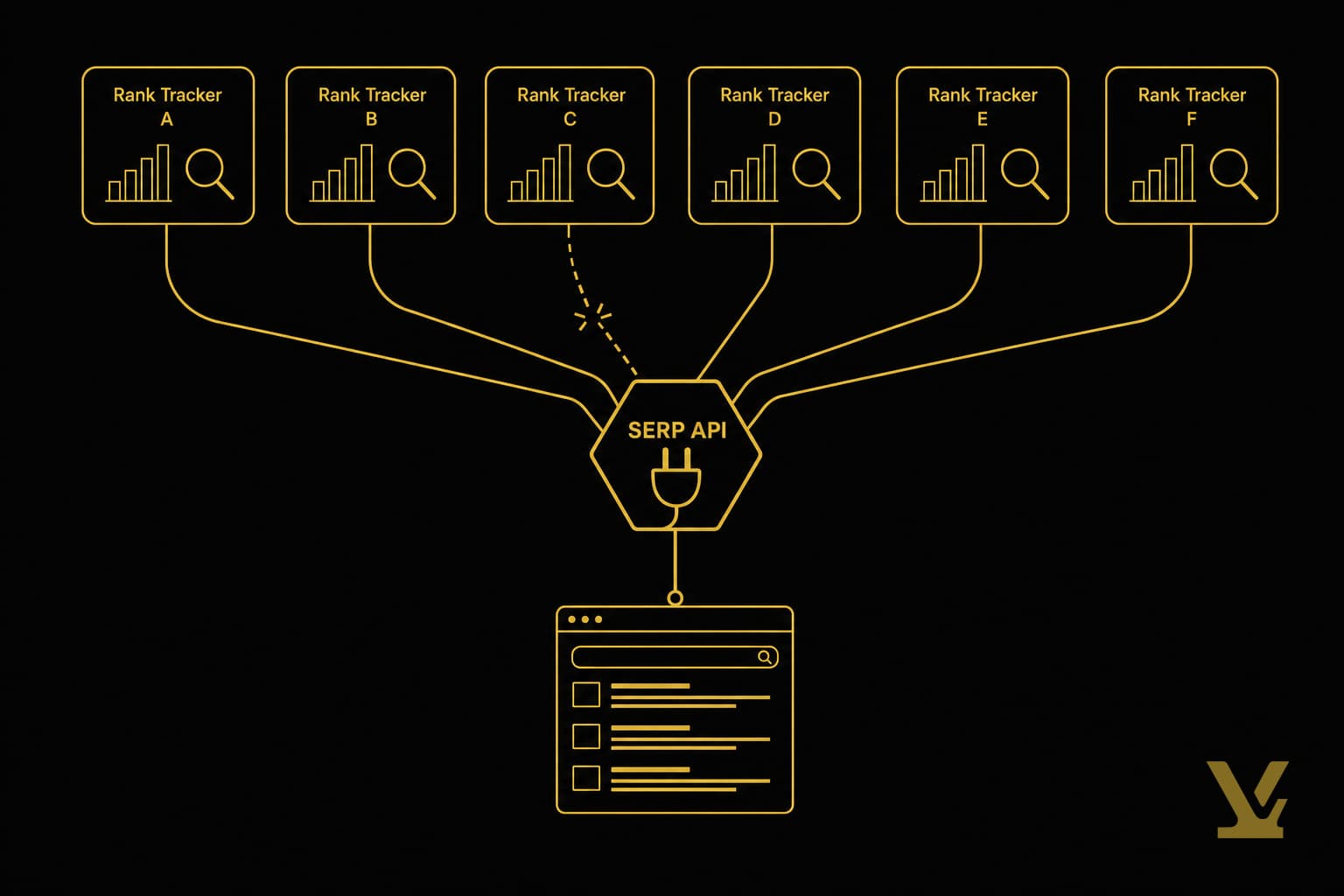
SERP APIs are real and useful, but calling them a replacement skips the fine print. They sell coverage and freshness, yet you still pay for volume, absorb latency, and inherit the terms-of-service and licensing risk that comes with automated results collection. Scale that across geographies and devices and the raw feed alone becomes a cost center, not a shortcut — and that is before you have written a single line of the logic that turns positions into priorities. That dependency cuts both ways: when a SERP API you built the pipeline around goes down, the outage becomes your outage too, so it is worth having a SERP API outage playbook ready before the feed you rent disappears mid-quarter.
This is why a raw feed rarely beats a packaged product once you count everything. Add the engineering to normalize, cluster, and refresh that data, plus the maintenance when a source changes format, and the "free the data" math flips — which is the whole reason to price tools on total cost of keyword research rather than sticker price. A SERP API is a competitive input to that stack, not a turnkey exit from it. The vendors most exposed to the "irrelevant" charge are the ones that never moved past reselling layer-one data in the first place.
The cost-of-being-wrong test: when to trust a number, when to validate

Here is the reframe that resolves the debate for a practitioner. Stop asking whether a tool's number is accurate in the abstract and start asking what it costs you to be wrong about this specific number. Accuracy only matters in proportion to the decision it feeds. If a keyword's estimated volume would not change your publish-or-skip call either way, the error is free and validation is wasted motion.
So apply a gate. Trust the tool number by default, and spend verification effort only where a wrong number would flip a decision — a cornerstone page you are staking a quarter on, a commercial term with real revenue behind it, or a close call near your effort threshold. For those, triangulate: check the estimate against a second tool, against the live SERP, and against a free Google signal. You can triangulate three free Google signals in minutes, and the disagreement itself tells you how much confidence the number deserves. Everything below the threshold passes through untouched.
Your keyword-tool trust checklist
Run any tool output through this quick filter before you act on it:
- Validate when the stakes are high. A wrong number on a cornerstone or commercial page can cost a quarter; validate those, not every long-tail idea.
- Read disagreement as signal. When two tools diverge sharply, treat the gap as a flag to check the live SERP, not as proof one tool is broken.
- Anchor to intent, not volume. A precise volume estimate on a query whose intent you have misread is just a confident wrong answer.
- Interrogate the source mix. Ask a vendor what feeds its numbers and how often they refresh; opaque data is a red flag worth pricing in.
- Keep one free cross-check in the loop. Autocomplete, Trends, and Search Console cost nothing and catch the worst tool errors before they reach a brief.
How VarynForge fits in
This is exactly the gap VarynForge is built for. Rather than reselling raw volume, it fuses SERP signals, intent, and difficulty into writer-ready briefs and a prioritized plan — the transformation and judgment layers the "tools are dead" argument overlooks. If you want a keyword workflow that survives the AI-search shift because it competes on interpretation rather than data alone, see how the VarynForge plans map to your stage.
Further Reading
- Best Keyword Research Tool for SEO: Free and Paid Picks for 2026
- Top 10 SEO Tools Digital Marketers Rely On
- Best AI SEO Tools: Practical Uses, Human Checks, and What to Avoid
Sources
- SparkToro — 2024 Zero-Click Search Study
- Google — AI Overviews expand to 200+ countries and 40+ languages
- Ahrefs — How accurate is keyword search volume
- Ahrefs — How to Use Google Keyword Planner (search-volume ranges)
Conclusion
Third-party keyword tools are not becoming irrelevant; the raw-data layer beneath them is becoming a commodity, and that is a different claim. The volume numbers were always estimates, the SERP was always the real judge, and neither fact is new. What changes now is that the moat moves up the stack — to interpretation, prioritization, and workflow — and buyers should pay for that, not for data they can source elsewhere. Judge any tool by the layer it actually improves, validate the numbers that carry real risk, and let the rest pass. Do that and the "irrelevant" debate stops being a threat and becomes a buying filter.
Frequently asked questions
Are third-party keyword tools actually dying?
No. What is dying is the exclusivity of the raw-data layer beneath them. AI Overviews and SERP APIs make search volume and results snapshots cheap to buy or approximate, so a tool that only resold that data has lost its moat. But most established tools also do the work that raw data cannot: they cluster queries by intent, score difficulty, generate briefs, and sequence a publishing plan. That transformation and judgment layer is where the durable value sits, and it is not being commoditized. Read the death notices as a warning to layer-one resellers, not to the category.
Can a SERP API fully replace a keyword research product?
Rarely, once you count the full cost. A SERP API sells coverage and freshness, but it returns a raw positions payload, not a workflow. To turn that feed into decisions you still have to normalize the data, cluster queries, model difficulty, refresh on a schedule, and maintain the pipeline when a source changes format. You also absorb latency, per-query pricing, and the terms-of-service and licensing risk of automated collection. For a team with engineering to spare it can be a powerful input, but for most, a packaged tool that already does the interpretation wins on total cost. Treat the API as one signal source, not an exit.
How can I tell whether a keyword tool's volume score is accurate?
Assume every estimate is approximate and validate selectively. Volume figures are modeled from a blend of Google Keyword Planner ranges, clickstream panels, and vendor heuristics, so they carry real error, especially for mobile-heavy or low-volume terms. Rather than auditing every number, triangulate the ones that matter: compare the estimate against a second tool, against the live SERP, and against a free Google signal like autocomplete or Search Console. When two sources disagree sharply, treat the gap as a flag rather than proof one is broken. The goal is directional confidence on decisions that carry risk, not a perfect number on every query.
How should I combine SERP API data with existing tool outputs?
Use the SERP API for what it is best at and let the tool do the interpretation. Pull the API for fresh, precise rankings, feature presence, and competitor positions on the queries you care about most. Feed those live checks into the tool workflow that already handles clustering, intent, difficulty, and briefing. In practice that means trusting your tool for the day-to-day plan and reaching for the API to verify high-stakes terms, confirm volatile SERPs, or spot AI Overview coverage. Do not run two parallel systems; pick the packaged tool as your system of record and use the API to validate its riskiest calls.
What product features should I demand from keyword tool vendors in 2026?
Ask for transparency and interpretation, not just bigger numbers. Demand to know which data sources feed each metric and how often they refresh, since opaque inputs are the root of unexplained divergence. Push for explainable difficulty and volume ranges rather than false-precision single figures, plus confidence indicators when a source is thin. Look for AI Overview and SERP-feature tracking, live-SERP validation, intent classification you can audit, and briefs that turn signals into a plan. Finally, weigh pricing on total cost of ownership, including your team's time, rather than sticker price. The vendors worth keeping compete on judgment, not on reselling data you can buy elsewhere.
Do AI-generated SERP summaries make manual verification obsolete?
No, they make it more important for the decisions that matter. AI Overviews change how clicks flow and can absorb traffic before a user reaches a result, which affects the relationship between reported volume and real visits. That makes a tool's raw number a weaker proxy for opportunity than it used to be. The response is not to trust an AI summary blindly or to abandon tools, but to check the live SERP for the queries you are staking real effort on. Manual verification becomes a targeted step reserved for high-stakes terms, not a chore you run on every keyword.