Stop Trusting Volume: Why LLM Signals Mislead SEO Teams
Search volume is a model estimate, not a measurement, and stacked LLM signals launder its error into false precision. Here is how to prioritize instead.

Every content team I advise still opens keyword research the same way: pull the search volume, sort descending, and let the biggest numbers decide what gets written. In 2026 that habit has quietly become a liability. The premise here is blunt — the reason LLM signals mislead SEO teams is not that the models are dumb, but that they confidently resample data that was never a measurement in the first place. Search volume is a model output dressed up as a fact, and stacking a second model on top of it does not sharpen the picture. It launders the error.
The fix is not another tool or a smarter prompt. It is a change in what you treat as evidence. I will show why every third-party volume figure traces back to just two upstream sources, why cross-checking tools breeds false confidence rather than triangulation, and how to rebuild prioritization around signals you can actually measure across every account you manage.
Why traditional search volume is a broken signal in 2026
The number's origin is the whole problem. Google removed exact search counts from its advertising API back in 2013 for privacy reasons and never replaced them with anything precise; what you see today is an estimate. Its own Keyword Planner makes that obvious, reporting demand as a wide range — often 1,000 to 10,000 searches a month for one commercial term, a literal 10x spread — as Ellipsis has documented.
Even that range is a twelve-month average, and the Planner lumps close-variant phrases into a single bucket, then reports one shared figure for the whole group, as Ahrefs explains in its search-volume glossary. So the tidy 2,600-a-month number a tool displays is really an annual mean of a bucket of related queries, extrapolated and rounded — not a count of anyone who searched last month. Treating it as a precise measurement is a category error that has been baked into keyword research for more than a decade.
A second decay sits on top of the estimation problem: the behavior the number claims to represent is itself shifting. In 2020, only 33.59% of the 5.1 trillion searches Google processed ended in a click on an organic result, SparkToro found. By 2024 the erosion was starker — for every 1,000 US searches, roughly 374 clicks reached the open web, per SparkToro's zero-click study. A high volume figure increasingly describes impressions you will never convert into visits. If you want to pressure-test the raw numbers your tools hand you, our guide to correcting keyword tool errors walks through the per-tool calibration first.
How LLM signals mislead SEO teams with false precision

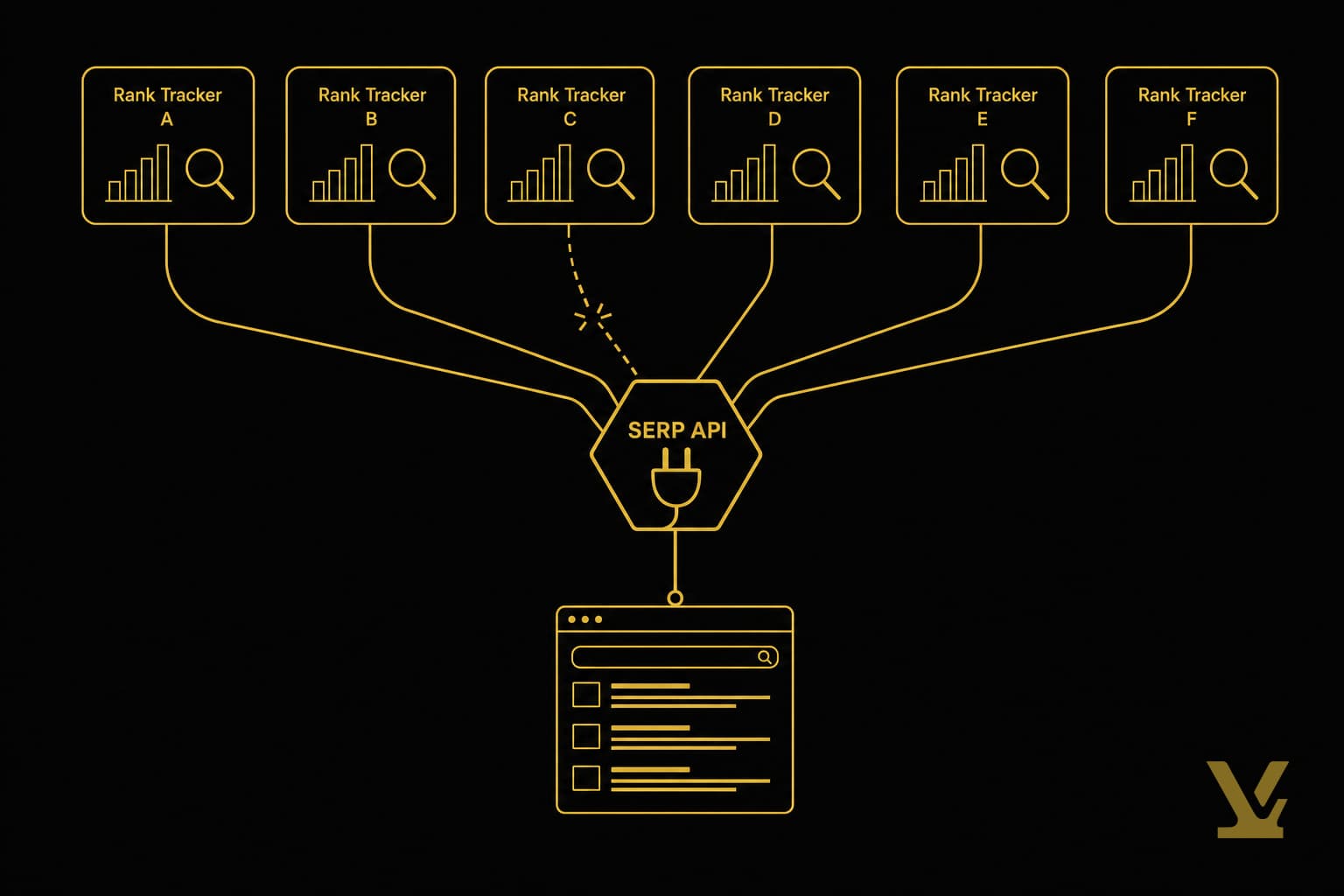
Here is the mechanic almost no one names. Third-party volume does not come from Google. It comes from clickstream panels — anonymized records of what a sample of real users type and click, harvested through browser extensions and apps, then sold to data vendors, as DataForSEO describes. A tool multiplies that sampled signal by a coefficient derived from the ratio of panel devices to the wider population, and out comes a monthly estimate. It is sampling plus extrapolation, which means the estimate inherits every bias of the panel.
Now stack the 2026 layer on top. LLM-blended trend signals and AI keyword suggestions feel like a fresh, independent read on demand. They are not. Under the hood they are trained on and prompted against the same public corpus of tool exports, Keyword Planner ranges, and clickstream-derived numbers everyone else already uses. So when your favorite tool, a second tool, and an AI overlay all agree a keyword is worth 2,400 searches a month, that agreement is not triangulation. It is the same two upstream datasets — Keyword Planner and clickstream panels — echoing back through three interfaces. Correlated sources cannot corroborate each other.
This is why the LLM layer is actively dangerous rather than merely redundant. Feed a wide, noisy estimate into a model and it returns a narrower, more confident-looking number with the uncertainty stripped off the display. The error band did not shrink; it just went invisible. Teams then treat a laundered guess as a hard target and commit editorial budget against it. The discipline that protects you is the same one that protects you from any generative output — verify against something the model never saw. Our breakdown of where AI SEO tools help and where they hallucinate makes the same argument at the tool level.
When volume still matters — and how to use it safely
None of this makes the number worthless. Volume earns its place in exactly three situations: transactional pages where a single high-intent query has a stable, multi-year history; decisions where the gap between two candidates is an order of magnitude, not a rounding error; and cases where a first-party signal has already confirmed demand and you only need volume to size it. The safeguard in all three is identical — attach a confidence band, never a point estimate, and refuse to rank two keywords whose ranges overlap against each other. A number you treat as a probability distribution can inform a decision. A number you treat as a fact will make it for you.
Audit checklist: test whether a keyword signal is trustworthy

Before a keyword earns a slot on the calendar, run it through a fast reliability check. The whole audit takes minutes per term and needs nothing beyond the free Google surfaces you already own. One of those free Google surfaces is GA4 itself — its own AI-driven insights layer surfaces intent signals worth folding into this audit; see our guide on how to use GA4 AI insights to uncover hidden intent signals for the exact tags and validation tests.
- Check source independence first. If every number you hold — tool A, tool B, the AI suggestion — resolves back to Keyword Planner and clickstream, you have one source, not three. Log it as a single data point.
- Cross-read against Google Search Console. For any topic you already have a page on, Search Console reports real impressions, clicks, and average position from actual queries, not a model. That is first-party ground truth.
- Read the live SERP for intent, not just the count. A number tells you nothing about what a searcher wants; the results page does. Our search-intent vector framework scores intent straight from SERP features.
- Run a 72-hour live probe. Point a small paid-search test or an internal site-search report at the term and watch what real users do. Measured clicks beat modeled volume every time.
- Record a confidence band, not a value. Note the range and how many independent signals sit behind it. One signal is a hypothesis; two or more that agree is a decision.
Three red flags should make you discard volume as the primary input outright: a bucketed range wider than roughly an order of magnitude, a term with zero Search Console history and no live-test data, and any figure that exists only because an AI tool asserted it. When you see them, drop the number to a tie-breaker and let a signal you can measure lead.
A signal-confidence framework to prioritize topics without volume

Replace volume-first ranking with what I call the Signal Confidence Score — a deliberately simple rule that fixes the correlated-source problem by counting independent evidence instead of tool agreement. A keyword scores one point for each genuinely independent signal that confirms demand: measured Search Console impressions, internal site-search frequency, a positive live paid-CPC test, a documented sales or support request pattern, and — counting once, no matter how many tools report it — third-party search volume. Prioritize only keywords that reach two or more points. Volume is allowed to be one of those points, never the deciding one.
Consider two candidates. Keyword A shows 8,000 monthly searches across your tool stack and nothing else — no impressions, no site-search hits, no test data. Keyword B shows a modest 400 in the same tools, but Search Console already logs steady impressions for a related query and your internal search sees it weekly. Volume-first ranking picks A, and you write to a number three interfaces copied from two datasets. The Signal Confidence Score picks B: two independent, measured signals agree, and the third-party estimate is a tie-breaker that happens to point the same way. B is the safer bet precisely because its case does not rest on the metric everyone else over-trusts.
The obvious objection is that first-party signals do not exist for net-new topics, so you are back to guessing. Fair — but now the guess is honest. For a topic with no measured demand the score is zero, and you treat the piece as an explicit bet: sized small and shipped as a live test rather than a committed cluster. That reframes speculative content as an experiment with a kill switch, which is exactly how our prioritization playbook and our method for mapping paid CPC data into organic priorities treat ambiguous demand.
Tactical playbook: 30-to-90-day moves for SEO teams
You do not need to rebuild the process overnight. Sequence the shift across a quarter so stakeholders see the logic before the KPI changes land.
- Days 1-30: Instrument first-party demand. Wire Search Console and your internal site-search into the same sheet your keyword tool already feeds. You cannot score independent signals you are not capturing.
- Days 1-30: Rewrite the content brief. Swap the volume field for a Signal Confidence Score field plus a one-line note on which measured signals back the term. What the template asks for is what writers optimize toward.
- Days 30-60: Run standing micro-experiments. Budget a small monthly amount for paid-search probes on ambiguous terms and let live click data settle debates that tool numbers cannot.
- Days 30-60: Reclassify demand by trend shape, not raw size, so a decaying keyword never outranks a rising one on last year's average. Our guide to reading keyword demand by trend shape covers the patterns.
- Days 60-90: Renegotiate the KPI. Move reporting from projected traffic toward captured intent and pipeline, so the team is judged on outcomes it can influence rather than a forecast it cannot.
Organizational implications and tool roadmaps
Two shifts make this durable. The first is cultural: a team that has publicly committed to volume-based targets needs cover to change, and the cleanest cover is a single dashboard where third-party volume sits beside measured first-party demand and visibly disagrees. Let the gap make the argument. The second is procurement: weight tool evaluations toward the capabilities this approach depends on — native experiment integrations, explicit confidence intervals, intent clustering, and honest disclosure of upstream sources. A vendor that shows you its error bars is worth more than one that hides them behind a confident number.
How VarynForge fits in
This is the workflow VarynForge is built around. Instead of ranking topics by a single borrowed volume figure, it synthesizes noisy third-party signals into intent-first, confidence-scored topic plans, so your calendar reflects demand you can defend rather than a number three tools copied from the same two sources. If you are ready to stop chasing spreadsheet volume, VarynForge's plans and pricing show where to start.
Key Takeaways
Search volume was never a measurement, and in 2026 the LLM layer stacked on top of it turns an old estimate into confident-looking fiction. The escape is not a better tool but a better definition of evidence: count independent, first-party signals and demote third-party volume to a single tie-breaking vote. Run the reliability audit on your next batch of keywords, score them by independent confirmation, and let the numbers you can actually measure decide what you publish. The teams that adjust first will spend their editorial budget on demand that is real, while everyone else keeps optimizing toward a mirage.
Further Reading
- Inaccurate search volumes ruin your SEO work — and how to fix it (Ellipsis)
- What is search volume, and how is it calculated? (Ahrefs)
- 2024 Zero-Click Search Study (SparkToro)
- What is clickstream estimated traffic volume? (DataForSEO)
Sources
- Ellipsis — Search volumes are not accurate (Keyword Planner ranges, 2013 API change)
- Ahrefs — Search Volume glossary (annual average, close-variant bucketing)
- SparkToro — In 2020, two-thirds of Google searches ended without a click
- SparkToro — 2024 Zero-Click Search Study
- DataForSEO — Clickstream estimated traffic volume methodology
- Google Search Central — Get started with Search Console
- Google Ads API — Keyword planning overview
Frequently asked questions
Why are search volumes from Keyword Planner and third-party tools shifting now?
They have always been estimates, but two pressures are exposing that in 2026. Google reports demand as a twelve-month average grouped into buckets of close-variant phrases, so the figure lags real-time behavior by design. Meanwhile searcher behavior is drifting fast as AI answers and zero-click results absorb intent that used to end in a click. On top of that, more tools now blend LLM-generated trend signals into their numbers, adding volatility rather than accuracy. The result is that the same keyword can swing between tools and between months even though nothing real changed. Treat movement in a volume number as noise until a first-party signal confirms it.
How do LLM outputs differ from traditional search volume data, and why does it matter?
Traditional volume is an extrapolation from clickstream panels and Keyword Planner ranges. LLM outputs are a model's summary of text that itself was built from those same exports and ranges. So an AI suggestion is usually not an independent read on demand; it is a re-description of the data you already have. That matters because feeding a wide, uncertain estimate through a model returns a narrower, more confident-looking number with the error bars hidden. The precision is cosmetic. If you act on it as though it were measured demand, you commit budget against a guess that looks like a fact.
What quick tests can I run to check whether a keyword's reported volume is trustworthy?
Run four fast checks. First, trace source independence: if every number resolves back to Keyword Planner and clickstream, you have one source, not several. Second, cross-read Google Search Console for any page you already own to see real impressions and clicks. Third, read the live results page to confirm the intent behind the query, which volume cannot tell you. Fourth, run a short paid-search or internal site-search probe and watch what real users do. If the volume figure disagrees with your measured first-party signals, trust the measured signals and demote the volume to a tie-breaker.
If I stop leading with volume, how should I decide which topics to prioritize?
Prioritize by independent confirmation rather than by the biggest number. Give a keyword one point for each genuinely independent signal that confirms demand: Search Console impressions, internal site-search frequency, a positive live paid-CPC test, a documented sales or support request, and third-party volume counted once no matter how many tools report it. Only advance keywords that reach two or more points. Volume can be one of those points, but never the deciding one. For net-new topics with no measured demand, treat the piece as a small, explicit bet shipped as a live test instead of a committed content cluster.
Can I still use paid search data or analytics as a volume proxy?
Yes, and they are among the best proxies you have because they are measured, not modeled. A live paid-search test shows real clicks on a real query today, and your analytics and internal site-search show what visitors already look for. These count as genuinely independent signals in a confidence score, unlike a second keyword tool that quietly draws from the same upstream sources. The one caution is scale: a short paid test measures demand at test budget, so read it as directional evidence of intent and interest, then size the opportunity once a broader signal agrees.
How do I convince stakeholders to move from volume-based KPIs to intent or outcome metrics?
Show the disagreement rather than argue the theory. Build one dashboard that places third-party volume beside measured first-party demand for the same keywords and let the gaps speak. When a high-volume term has no impressions, clicks, or site-search interest, the case makes itself. Then phase the change so nobody is blindsided: instrument first-party signals first, rewrite the content brief to ask for a confidence score, and only renegotiate the reported KPI once the new signal is visibly more predictive. Framing it as reducing wasted editorial budget, not chasing a trend, is what wins finance and leadership.