
Why SEO Tools Failed to Diversify SERP Sources
A legal fight over SerpApi's access to Google is exposing how SEO tools centralized SERP sourcing and why they failed to diversify before it mattered.
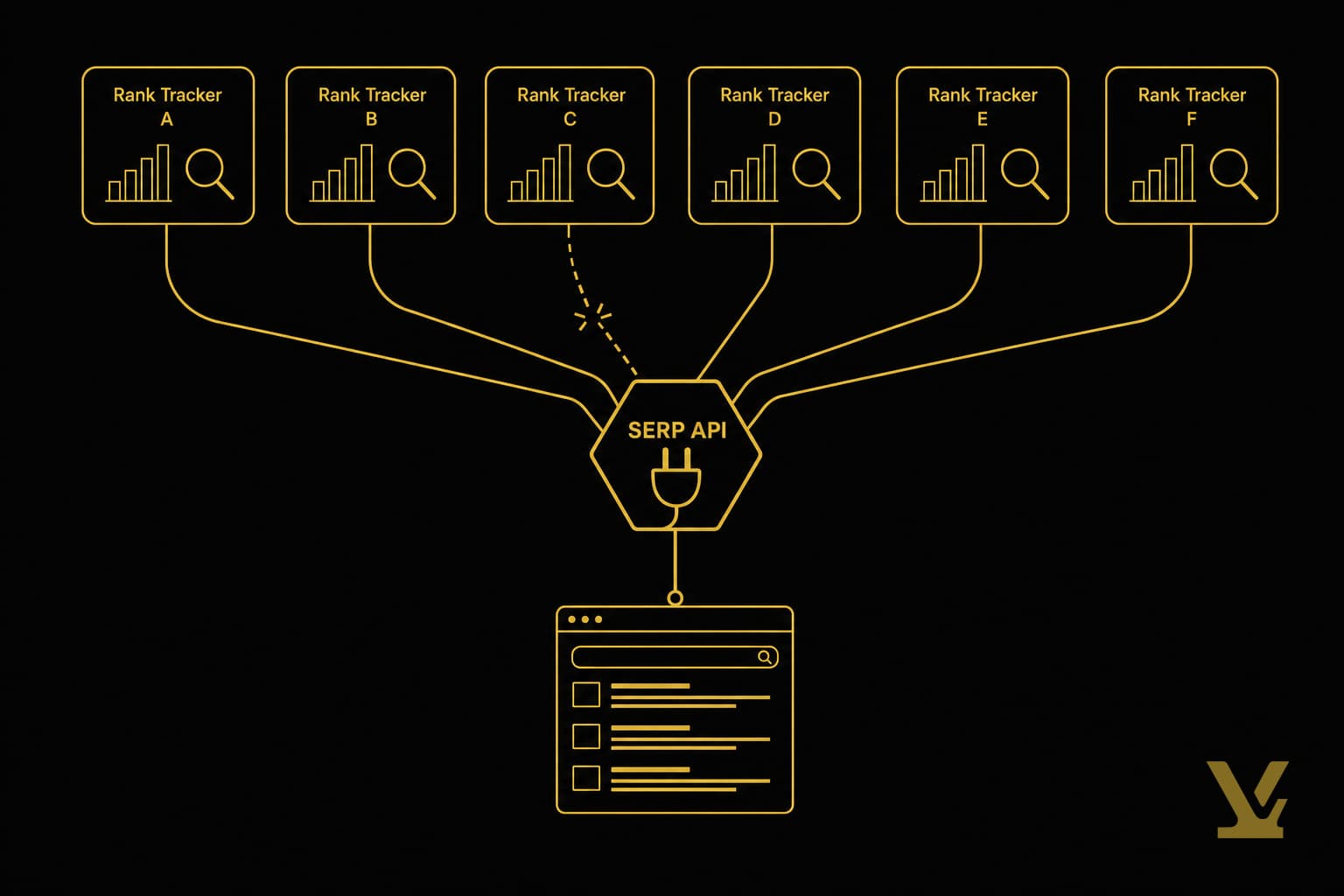
In mid-July 2026, a legal dispute over how SerpApi accesses Google's search results is rippling through the SEO tooling market. Vendors have gone quiet, community threads have gone loud, and some rank trackers have quietly started to lag. The immediate story is a fight over data access. The deeper question is why the industry never moved to diversify SERP sourcing long before the pressure arrived.
Here is the argument this piece makes. The disruption is not an act of God. It is the predictable result of a trade-off almost every tool vendor made: outsource the hardest, most expensive part of the stack to a handful of SERP data providers, then skip the contingency engineering that would absorb exactly the kind of shock now working through the market.
What the SerpApi legal action is and why SEO tools are on edge
SerpApi is one of several companies that sell structured access to search engine results pages: you send a query, it returns the ranked results as clean data. That service sits directly on top of Google, whose Search Essentials guidelines have long restricted automated access to Search. When a provider operating at that scale becomes the subject of legal pressure, everything built on top of it inherits the uncertainty. If you need a refresher on the surface all of this depends on, start with what a SERP actually is.
As of mid-July 2026 the signals are the kind you read between the lines: terse vendor status pages, unusually active community threads, and rank trackers that fell out of sync without much explanation. Treat the specifics as evolving rather than settled — this is a live dispute, not a decided case. But the direction is clear enough to act on. A single point in the data supply chain is under strain, and the products downstream are feeling it.
How modern SEO tooling depends on live SERP access

Most SEO products are, underneath the dashboard, SERP-reading machines. Rank trackers query results pages on a schedule and record where a domain sits. Keyword tools infer difficulty and opportunity from who already ranks and which SERP features appear. Content gap analysis compares your positions against a competitor's, one result at a time. Strip away the branding across the tools marketers rely on and you find the same raw input: a fresh read of the results page.
Here is the part buyers rarely see. Many of these products do not crawl Google themselves. Building and defending a compliant, large-scale SERP crawl is hard, costly, and legally exposed, so vendors buy the feed instead — from a small set of specialist providers, or through shared scraping infrastructure that ultimately hits the same choke points. It is why the question of whether third-party keyword tools still earn their place is really a question about the plumbing behind them. The dashboard feels like a product. The data underneath is a supply chain.
The decision points that concentrated SERP sourcing risk

This concentration was a choice, made one reasonable-looking decision at a time. Outsourcing SERP data cuts infrastructure cost and shrinks time to market. A managed provider ships an SLA and someone to call, which reads as reliability on a procurement checklist. And network effects pull everyone toward the same two or three vendors, because that is where coverage and tooling are best. Each decision is defensible in isolation.
The strategic error is what did not happen next. Almost no one funded the boring insurance: a second ingestion path, cached baselines to ride out a gap, or a contract clause guaranteeing data continuity. The common defense — that running a real crawl is too costly and too risky to do in-house — is true, and it is precisely why contingency mattered. When your core input comes from outside your walls, resilience is not a feature you bolt on later. It is the price of the trade you already made.
Downstream impacts: data gaps, pricing shocks, and eroded trust
The first symptom customers notice is desync. Rankings freeze or drift, index updates arrive late, and two tools that should agree suddenly do not. For a team making calls off that data, the failure is quiet and expensive: you optimize against a picture that is days stale, or you pause the work while you decide whether to trust the numbers at all. This is the moment correcting tool errors before you trust them stops being hygiene and becomes survival.
The second symptom is commercial. If sourcing gets more expensive or more restricted, that cost lands somewhere — higher subscription prices, tighter usage caps, or thinner data behind the same plan. The third symptom is trust. Analytics vendors sell confidence, and confidence does not survive many weeks of visibly wrong dashboards. Retention risk follows quietly behind the data gaps, and it is far harder to win back than it was to lose.
Why resellers, proxies, and partnerships couldn't diversify SERP feeds
The obvious answer — just add more sources — is where the plan usually breaks. Resellers look like diversification but often sit on the same upstream provider, so a shock at the root hits every alternative at once. Proxy-based scraping raises the identical legal question that started the crisis, which is not diversification so much as spreading the same exposure across more addresses. Direct publisher or search partnerships are genuinely different, but they are slow to negotiate and expensive to maintain.
This is why so many teams failed to diversify SERP feeds even when they knew they should. Real multi-source coverage means reconciling different formats, refresh rates, and blind spots — engineering work with no shiny feature to show for it. The one-stop API felt like safety because it removed that work from the roadmap. It also removed the redundancy that would have mattered on exactly the day it was needed. Comfort and resilience were quietly traded against each other, and comfort won.
A risk-mitigation playbook for toolmakers and content teams

You cannot rebuild a data supply chain in a week, but you can shrink your exposure fast. The moves split cleanly between the teams that build tools and the teams that depend on them. For toolmakers, the priority is removing the single point of failure:
- Add a second ingestion path, even a partial one, so a single provider going dark degrades coverage instead of ending it.
- Cache SERP baselines. A recent snapshot you own turns an outage into stale-but-usable data rather than a blank screen.
- Write data-continuity and notice clauses into provider contracts, so a change in access becomes a negotiated event rather than a surprise.
- Show sourcing status inside the product. Users forgive a documented gap far more readily than a silent wrong number.
- Price for contingency. Build the cost of redundancy into the model before you need it, not after the invoice lands.
If you buy these tools rather than build them, your leverage is procurement and verification. Ask vendors where their SERP data comes from and what happens when that source is disrupted. Cross-check the rankings that drive real decisions against Search Console, which is first-party and unaffected by third-party scraping disputes. Keep a true-cost view of the tools you pay for, and never let one dashboard be the single source of truth for a decision that matters.
The longer-term market shifts this dispute will accelerate
Short-term pain tends to harden into structural change, and a few shifts look likely. Expect consolidation: vendors that cannot afford resilient, multi-source data will sell, merge, or quietly narrow their scope. Expect a pivot toward first-party telemetry — Search Console, analytics, and on-site behavior that no third party can revoke — promoted to the trustworthy core, with third-party SERP data demoted to a supplement rather than the foundation.
Expect paid publisher and search partnerships to move from fringe to normal, because licensed access is the one path that is both durable and defensible. And expect an opening for niche, privacy-first indexers that treat compliant sourcing as the product rather than an afterthought. The winners will be the teams that treated SERP data as a supply chain to be managed. The losers will be the ones that treated it as a utility that would always be there.
How VarynForge Fits a Market With Fewer SERP Feeds
This is the uncomfortable case for premium keyword tools, VarynForge included: the era of treating a live SERP snapshot as free, infinite, and permanent is ending. The product response is not to scrape harder — it is to lean on human-vetted signals and first-party intent, to be explicit about where data comes from, and to design for the day a source goes dark instead of pretending it never will. That is the resilience VarynForge is built for: research and content planning that does not rest on a single fragile feed. If you are evaluating premium tools right now, put sourcing transparency and contingency on the checklist, and see how VarynForge Premium Keyword Research approaches the problem.
Key Takeaways
The SerpApi dispute is a stress test, and it is exposing a design decision the whole industry made years ago. Centralizing SERP sourcing on a few providers was rational for cost and speed; skipping the contingency that centralization demanded was not. The tools that recover fastest will be the ones that diversify their sources, own a cached baseline, and tell users the truth about where their data comes from. Treat SERP data as a supply chain, because that is exactly what it is — and supply chains are managed, not assumed.
Further Reading
- Web scraping: methods and legal context
- The Robots Exclusion Protocol
- Search engine optimization: an overview
Sources
Frequently asked questions
What happened between SerpApi and Google, and does it affect every SEO tool?
As of mid-July 2026 this is an evolving legal dispute over how SerpApi accesses Google search results, not a settled case, so treat the specifics as provisional. It matters well beyond SerpApi because a large share of SEO tools depend on a small number of SERP data providers or shared scraping infrastructure. Not every tool draws from the same source, but enough of the market concentrates on a few that a single disruption ripples widely. Tools with diversified or first-party data are simply less exposed to it.
Why do so many SEO tools show delayed or wrong rankings when a SERP provider is disrupted?
Most rank trackers and keyword tools do not crawl Google themselves; they read the results page through a third-party feed. When that feed slows or stops, the tool has nothing fresh to display, so it either freezes on the last good data or updates late. Because several products draw from the same upstream source, they can all desync at the same time. That is why two tools that normally agree will suddenly disagree during an outage, and why the errors feel coordinated rather than random.
Can SEO tools quickly switch to other SERP sources if one API goes dark?
Rarely as fast as buyers expect. Many alternatives resell the same upstream provider, so they fail together. Proxy-based scraping raises the same legal exposure that caused the disruption in the first place. Genuinely independent sources do exist, but wiring them in means reconciling different formats, refresh rates, and coverage gaps, which is engineering work most vendors quietly deferred. A tool that already built multi-source ingestion can fail over in hours. One that did not may need weeks to stand up an alternative.
What should I do as an editor if my keyword tool data suddenly looks wrong?
Slow down before acting on it. Cross-check the rankings that drive real decisions against Google Search Console, which is first-party and unaffected by third-party scraping disputes. Compare two independent tools; if they disagree, trust neither blindly. Pause any large optimization based purely on the suspect data until it stabilizes, and ask your vendor directly what is happening and when normal updates will resume. Treat the dashboard as one input into your judgment, not the final verdict on where you rank.
Are paid keyword tools safer than free scrapers during a legal dispute like this?
Not automatically. Price does not equal resilience. A paid tool that sources from a single provider is just as exposed as a free scraper hitting the same well. What matters is architecture and contracts: whether the vendor keeps more than one data source, holds cached baselines, and has continuity clauses with its providers. Some paid tools are far more robust than free ones; others simply charge more for the same fragile feed. Ask how the data is sourced before you assume you are covered.
Should I ask my SEO vendor for SLAs or transparency about where their SERP data comes from?
Yes, and it is fast becoming a standard procurement question. Ask where the SERP data originates, whether there is a backup source, how outages are communicated, and what the contract actually promises about data continuity. A vendor that answers clearly is one that has thought about resilience. A vendor that treats sourcing as a secret is asking you to carry a risk you cannot see. Put these questions in writing before you renew, not after the next disruption.