Revalue Keywords for AI SERP Summaries, Not Clicks
AI SERP summaries now answer queries before the click. Revalue every keyword by its residual intent and provenance, then run a defensive sprint this week.
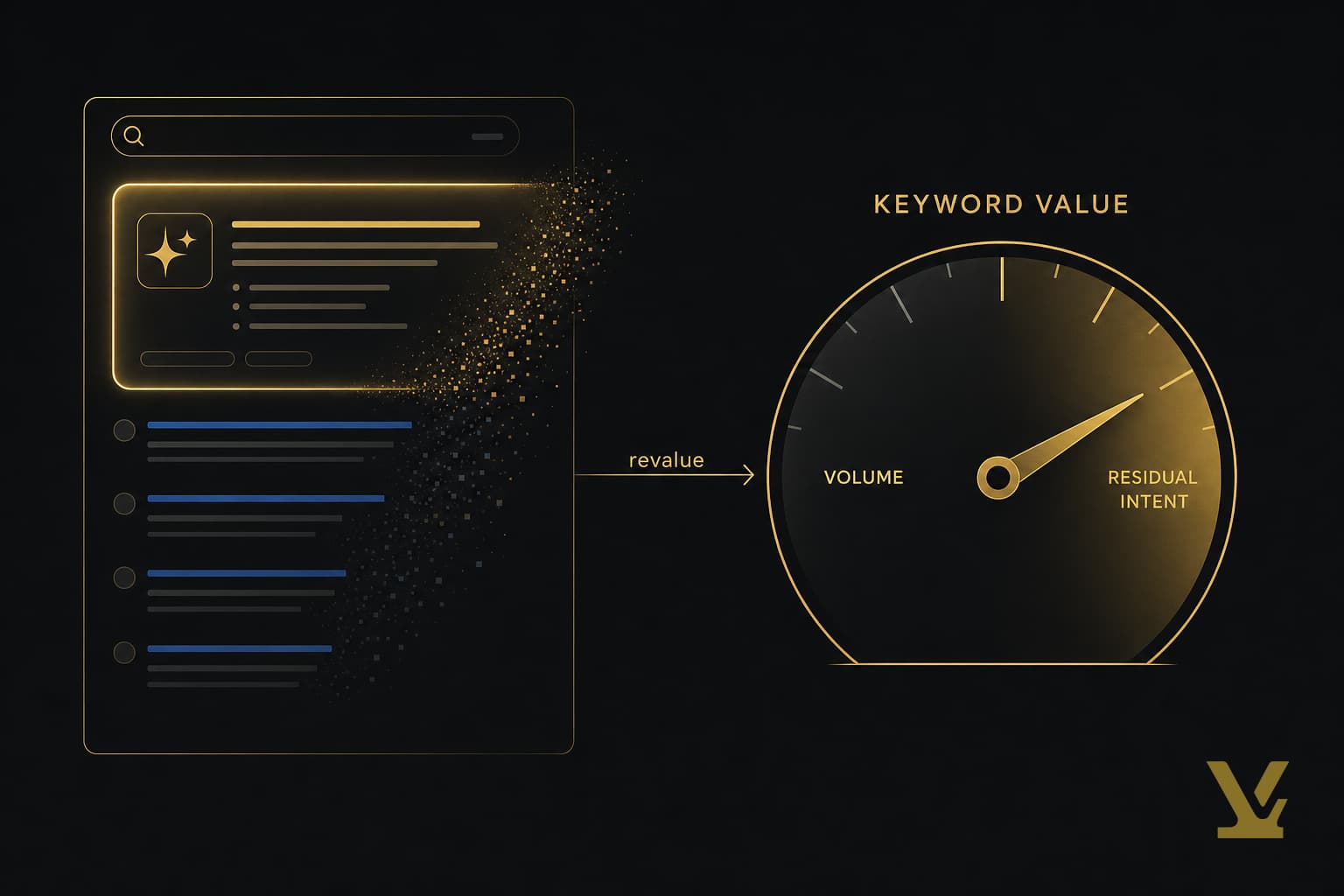
AI SERP summaries now resolve a growing share of queries on the results page itself, and the first instinct across most content teams is fatalism: the clicks are gone, so brace for impact. That instinct misreads the problem. The clicks did not evaporate — the value of the keyword that used to earn them changed shape. This piece argues you should stop pricing keywords on search volume and start pricing them on residual intent. You get a scorecard, a set of plays to run this week, and the metrics that replace raw organic clicks.
Why AI SERP Summaries Broke the Keyword's Currency
For two decades, a keyword's worth was a simple function: search volume times click-through rate times conversion value. That equation assumed the searcher had to leave the results page to get an answer. AI summaries break the middle term. When a generated answer sits above the blue links, click-through on informational queries collapses, and the volume you were valuing stops converting into sessions. The demand is still there; the path from demand to your site is not. That gap is the whole story of zero-click search: build content a machine-generated summary cannot fully satisfy, and the click survives.
The scale is measured now, not anecdotal. A 2025 Pew Research Center study of 900 American adults found that users who saw an AI summary clicked a traditional result in just 8% of visits, against 15% when no summary appeared — roughly half the click rate (Pew Research Center, 2025).
Two further findings change how you value a term. Users clicked a link inside the summary itself in only 1% of visits, so being cited is not the same as being visited (Pew Research Center). And sessions ended right after the summary appeared 26% of the time, versus 16% on classic results, which means the summary often closes the task outright (Pew Research Center).
If your Search Console graph fell off a cliff this quarter, an AI summary is a prime suspect — but not the only one. Run a structured check before you conclude anything, because a summary-driven decline and a core-update decline call for different fixes (diagnosing an overnight organic-traffic drop).
How AI Overviews Assemble an Answer
To reprice keywords, you need a working model of what gets summarized. An AI Overview is not a ranking; it is an extractive-plus-generative pass over the top results. The system retrieves candidate pages, pulls the passages that most directly answer the query, and composes them into a short synthesis with a few cited links. Google states there is no special markup to force inclusion — the same content and quality systems that drive ranking decide what the overview draws from (Google Search Central).
Format and phrasing decide exposure. Pew found that longer, question-shaped queries trigger summaries far more often: 53% of searches of ten or more words produced one, versus just 8% of one- or two-word searches (Pew Research Center). And roughly 58% of surveyed users hit at least one summary-generating query in a single month, so this is not an edge case confined to a few topics (Pew Research Center). At that scale, treating AI overviews purely as traffic loss undercounts them — some convert the reader before they ever click through.
The practical read: definitional, factual, and simple how-to phrasings are exactly the ones that summarize cleanly, because a short extract satisfies them. Comparative, transactional, and tool-driven queries resist compression — there is no forty-word answer to which plan should I buy or calculate my figure. That asymmetry is the seam you will exploit in the scorecard.
Which Queries Go Zero-Click: A Working Taxonomy

Not every keyword is equally exposed. Sort your targets with one question: can a short extract fully discharge the intent? If yes, the query is summary-sufficient and will bleed clicks. If no, it is click-required and largely survives. Treat this sort as the first pass of keyword research for zero-click, then layer citation-likelihood metrics on top before committing a brief.
- Summary-sufficient: definitions, quick facts, simple how-tos, FAQ-style lookups, and unit conversions. A machine answers these in a sentence.
- Click-required: transactions, tool and calculator use, primary data and original research, deep comparisons, and anything that needs personalization or trust before it converts.
This is intent classification with a sharper edge. If you already score queries by intent, add a click-required flag on top; our vector model gives you the base rubric to extend (a vector framework for search intent).
Why the Keyword as a Unit of Value Must Change
Here is the reframing. A keyword's value in AI SERPs is not its search volume; it is its residual intent — the share of the query an extractive summary cannot discharge. Volume tells you how many people ask. Residual intent tells you how many still need you after the machine has answered. On a summary-sufficient term, residual intent trends toward zero even at high volume, because the SERP is now an answer engine rather than a list of links (the SERP is now an answer engine). On a click-required term, residual intent stays high because the click is where value actually transfers.
Residual intent has a companion: provenance-ownership — whether owning the term makes you the source the model names and links. On queries you cannot keep the click for, being the cited entity still compounds brand recall and downstream branded search. So two levers replace volume: how much intent survives the summary, and how reliably you own the citation when it does not. Raw volume becomes a vanity input; it prices demand, not recoverable value (the conversion-gradient case for keyword research). Owning the citation matters even more given rising AI search distrust — a named, trusted source is what a skeptical reader clicks through to verify.
The Residual-Intent Scorecard for AI SERPs

Turn the two levers into a repeatable score. Rate every candidate keyword from zero to three on four dimensions, then sum to a zero-to-twelve index.
- Click-resilience: how much of the intent forces a click. Transactions and tools score high; definitions score zero.
- Conversion-resilience: whether the click, once earned, still converts. Bottom-funnel terms score high.
- Provenance-ownership: how likely you are to be the cited, named source if a summary appears. Experience, original data, and clean structured markup lift this.
- Format-fit: whether the best answer is a format a summary cannot replace — a calculator, a dataset, an interactive comparison.
Decision rule: score eight to twelve, promote (build the click-required format); score four to seven, retrofit (add provenance, tools, or data to raise the floor); score zero to three, deprioritize (keep for citation and brand, do not fund net-new depth). The exact cutoffs matter less than the effect: the ranking inverts. High-volume definitional terms that topped old plans fall to retrofit or deprioritize, while mid-volume transactional and data queries climb to promote.
How to Score a Keyword (Two Worked Examples)
Take what is a marketing qualified lead, a high-volume definitional query. Click-resilience zero (a sentence answers it), conversion-resilience one, provenance-ownership two if you publish the canonical definition, format-fit zero — a total of three. Deprioritize it for depth, but keep a tight, well-marked-up page so you still win the citation when the summary fires.
Now take saas churn rate calculator, a mid-volume transactional-tool query. Click-resilience three (a summary cannot run the calculation), conversion-resilience three, provenance-ownership two, format-fit three — a total of eleven. Promote it: this is where a summary-proof asset earns the click the definition just lost. Two terms, opposite verdicts, and neither ranking follows search volume.
Tactical Plays to Launch This Week
You do not need a quarter to respond. Five plays move the needle in days.
- Retrofit your top summary-sufficient page into a tool, calculator, or template. It recovers click-required intent a summary cannot serve. Lead time: two to five days.
- Add or verify structured data and explicit authorship on your highest-value pages so you win the citation slot when a summary appears. Lead time: one to two days (Google structured data guide).
- Shift new briefs toward comparative, transactional, and primary-data angles the summary cannot compress. Lead time: this week's editorial planning.
- Publish one piece of original data — a small survey, a benchmark, a teardown — that becomes the thing summaries must cite. Lead time: three to seven days.
- Instrument the new metrics before you judge any page, and, where a page still ranks, run a focused CTR recovery loop instead of a full rewrite (a CTR recovery loop). Lead time: one day.
Sequence it as a sprint. In the first thirty days, score your top cluster and retrofit the two highest-value summary-sufficient pages. By sixty days, ship one original-data asset and reset briefs to click-required angles. By ninety days, review the new metrics and reallocate budget from deprioritized terms to promoted ones.
Metrics That Replace Raw Organic Clicks

If raw organic clicks are a shrinking denominator, stop reporting them as the headline. Track four signals instead. These four sit inside a broader Generative Engine Optimization metrics stack — expect to keep adding to it as summary formats evolve.
- Cite-through: how often you are the named, linked source inside a summary for your target queries. Sample it by hand or with rank tools that log AI Overviews.
- Assisted conversions: conversions where an AI-referred or branded session touched the path, visible in your analytics attribution reports.
- Branded follow-on search: the lift in branded queries after a summary cites you — a proxy for recall you cannot capture as a click.
- Engaged session starts: sessions that begin with real interaction, separating a curious bounce from a genuine visit.
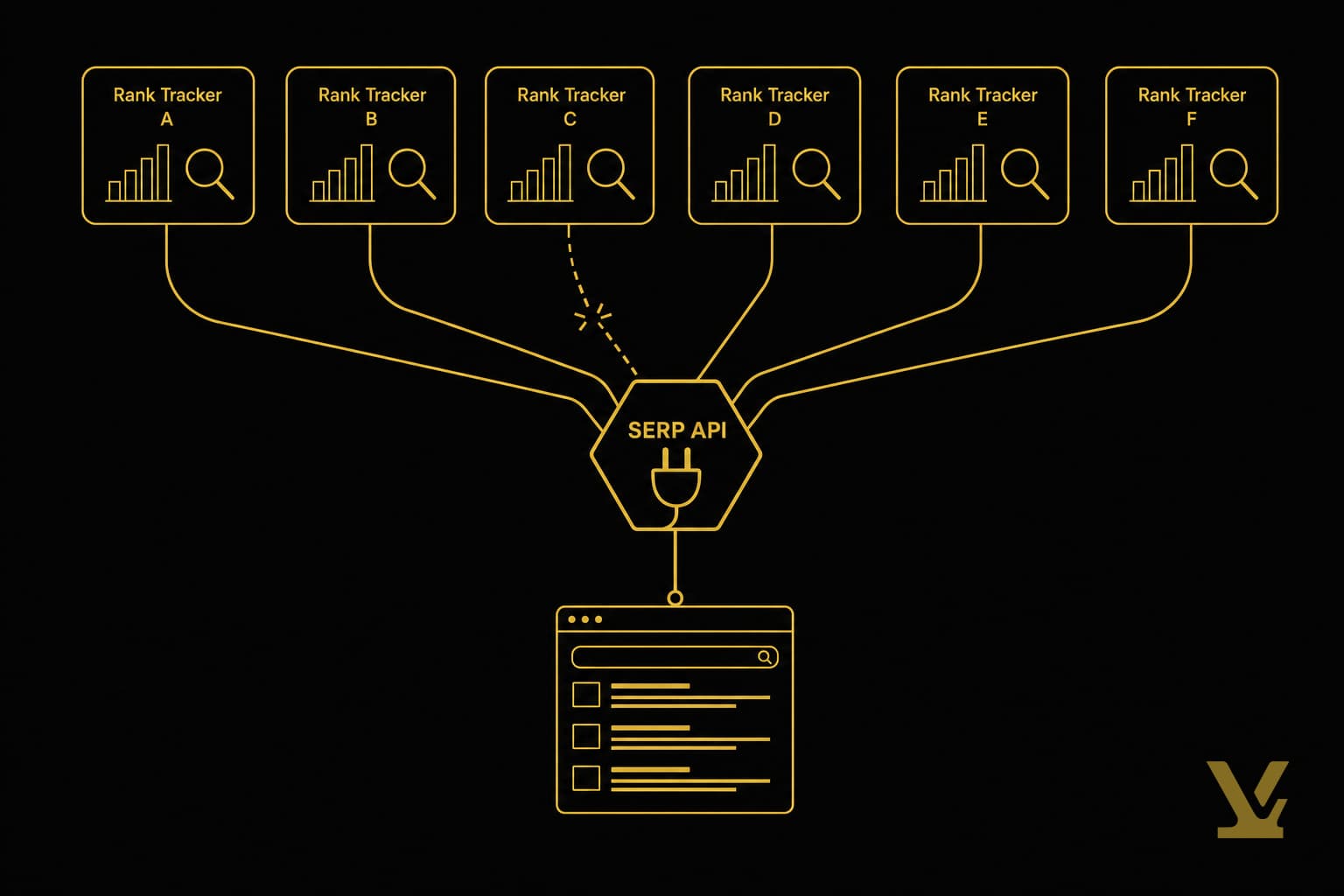
None of these live in a single default dashboard, but all are buildable today. Search Console anchors branded-query and impression trends; your analytics platform supplies assisted conversions and engagement; cite-through you sample manually until tooling matures (Google Search Console). Whichever rank-tracking tool you lean on for that sampling, plan for a SERP API outage — a single provider's downtime can blind your cite-through numbers for days.
How VarynForge fits in
Repricing a keyword portfolio by residual intent is a research problem before it is a writing problem: you have to score intent, spot the summary-proof formats, and find the terms where you can still own provenance. VarynForge is built for exactly that triage — turning a raw keyword list into a prioritized, AI-aware content plan instead of a volume-sorted spreadsheet. See how the plans line up on our pricing page.
Further Reading
- AI SEO Tools That Speed Keyword Research and Content Planning
- Google Search Central: AI features and your website
- Google: Generative AI in Search (Google I/O 2024)
Sources
- Pew Research Center — Google users are less likely to click on links when an AI summary appears (2025)
- Google Search Central — Intro to how structured data markup works
- Google Search Central — How to use Search Console
Key Takeaways
AI SERP summaries did not destroy keyword value; they relocated it. Price each term by residual intent — what the summary cannot answer — and by whether you can own the citation, not by raw volume. Score the four dimensions, promote the summary-proof and transactional terms, retrofit the middle, and deprioritize the definitional long tail to citation-only. Then swap raw organic clicks for cite-through, assisted conversions, branded follow-on, and engaged sessions. The teams that reprice now will compound while everyone else keeps mourning a metric that already moved.
Frequently asked questions
Are AI SERP summaries actually causing the traffic drops I see in Search Console?
They are a leading suspect, but not the only one. A 2025 Pew Research Center study found that users who saw an AI summary clicked a traditional result in about 8 percent of visits, versus 15 percent when no summary appeared, so the click compression is real and measured. Before you blame it entirely, separate a summary-driven decline from a core-update or seasonal decline. Look at whether impressions held steady while clicks fell on informational, definitional queries. That pattern points to summaries. If impressions and rankings also dropped, you are dealing with a different problem that needs a different fix.
Which types of queries are most likely to become zero-click?
The ones a short extract can fully answer. Definitions, quick facts, simple how-tos, FAQ-style lookups, and unit conversions summarize cleanly and lose the most clicks. Queries that resist compression keep their clicks: transactions, tool and calculator use, primary data and original research, deep comparisons, and anything that needs personalization or trust before it converts. A fast test is to ask whether a forty-word answer would end the searcher's task. If yes, treat the query as summary-sufficient and expect the click to disappear. If no, it is click-required and worth funding.
How do I revalue a keyword when search volume no longer predicts clicks?
Price the term by residual intent instead of volume. Residual intent is the share of the query an extractive summary cannot discharge, plus how reliably you can own the citation when a summary appears. Score each keyword from zero to three on four dimensions: click-resilience, conversion-resilience, provenance-ownership, and format-fit, then sum to a zero-to-twelve index. High scores mean the click survives and converts, so you invest. Low scores mean the summary answers it, so you keep a lean, well-marked-up page for citation and move budget elsewhere. Volume becomes an input, not the verdict.
Can structured data force AI assistants to link back to my site?
No. Google states there is no special markup that forces inclusion in an AI Overview, and the same content and quality systems that drive ranking decide what a summary draws from. Structured data and clear authorship still matter, though, because they help the model identify you as a credible, named source when it does cite something. Think of markup as improving your odds of owning the citation slot, not as a lever that guarantees a click. Pair it with genuine experience signals and original data, which are harder for a summary to replace and more likely to be attributed.
What can I do this week to protect my highest-value pages?
Run five quick plays. First, retrofit your top summary-sufficient page into a tool, calculator, or template that a summary cannot serve. Second, verify structured data and explicit authorship on your best pages so you win the citation slot. Third, shift new briefs toward comparative, transactional, and primary-data angles. Fourth, publish one piece of original data that summaries must cite. Fifth, instrument the new metrics before you judge any page. Most of these take one to five days. Sequence them as a thirty, sixty, ninety day sprint so you are reallocating budget by the end of the quarter.
Which metrics should replace raw organic clicks in my reporting?
Track four signals that survive the shift. Cite-through measures how often you are the named, linked source inside a summary for your target queries. Assisted conversions capture conversions where an AI-referred or branded session touched the path. Branded follow-on search measures the lift in branded queries after a summary cites you, a proxy for recall you cannot see as a click. Engaged session starts separate a curious bounce from a genuine visit. None of these live in one default dashboard, but Search Console and your analytics platform supply most of them today, and cite-through you sample manually until tooling matures.